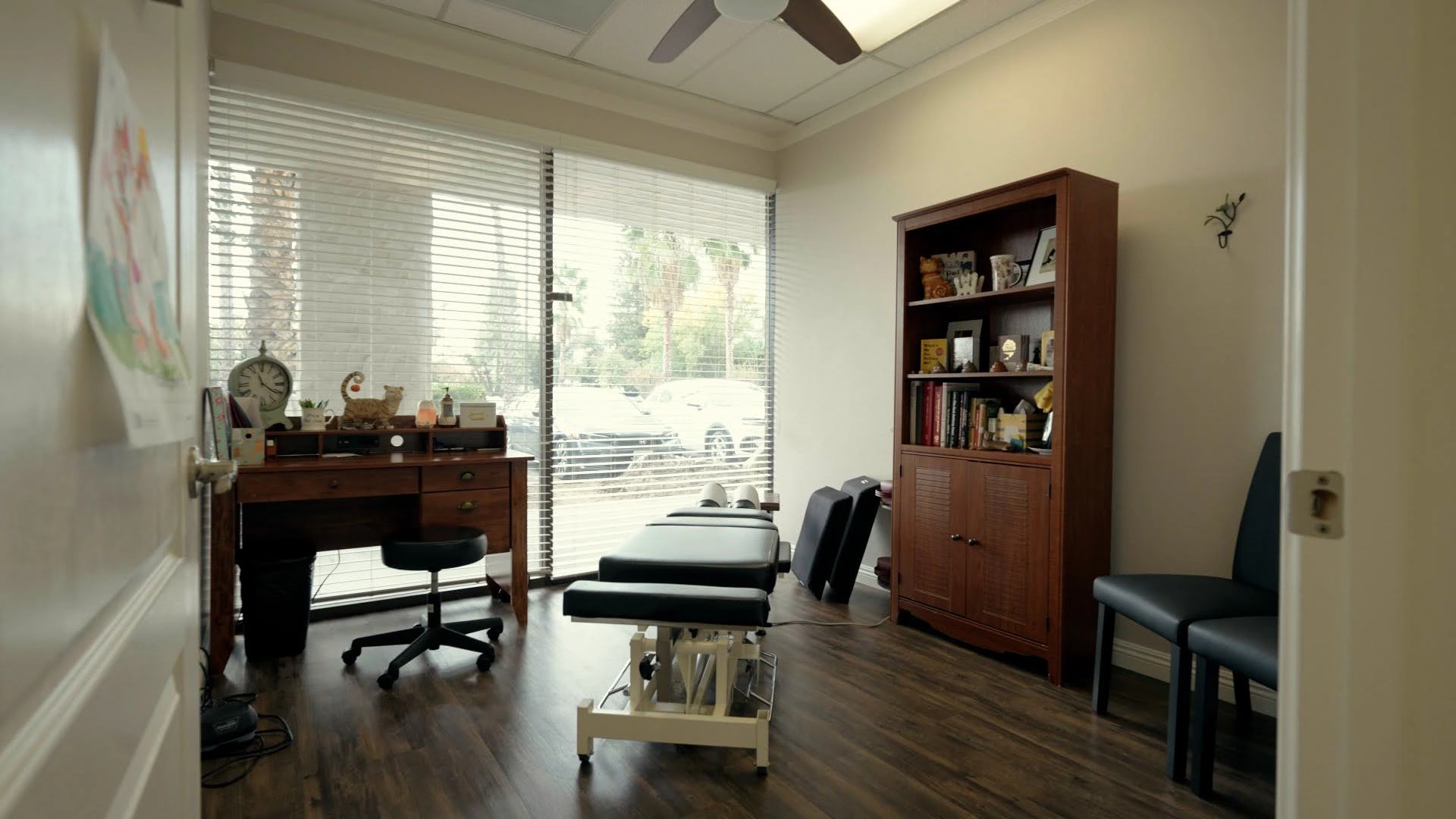

Every new parent eventually meets the 3 a.m. cry, the one that does not stop for a feeding, a fresh diaper, or a lap around the living room. We want answers, and we want them fast. That is often the moment a parent starts searching for a chiropractor for babies, and I would rather hand you a straight answer than a sales pitch.
Here is mine. As a Pediatric Chiropractic Specialist, I can tell you that gentle, low-force care is the standard to look for with infants, that the research on benefits is small and mixed, and that your pediatrician comes first when your baby shows a warning sign. At The Natural Path Health Center in Fresno, we describe our infant care as gentle chiropractic care for newborns and infants, and the rest of this post explains what that means and where the evidence stands.
What Can a Chiropractor Do for Babies?
A chiropractor can examine your baby's posture, movement, and spine, then use gentle contact when the exam shows that care is appropriate. Parents usually arrive because of persistent crying, trouble settling, or a feeling that something is off, and a careful first visit starts with listening to that concern.
Chiropractic care is among the most commonly used complementary therapies for children and adolescents. A 2025 review of chiropractic care in children found limited data with a range of findings and often no definite conclusion, and it urged pediatric providers to talk with families about complementary care so guidance stays focused on health and safety.
I agree with that last point completely. We are here to work alongside your pediatrician, not around them.
What Does a Chiropractor Do for Colic Babies?
A chiropractor may apply gentle manual care to a colicky baby, and small studies suggest some parents see less crying, but the evidence is not strong enough to call chiropractic care a treatment for colic. I will not promise you a cure. Nobody can honestly do that.
Colic means persistent and often inconsolable crying in an otherwise healthy and well-fed infant. It typically starts in the second or third week of life and peaks around six weeks. The same reference notes that colic resolves by 12 weeks in 60% of infants and by 16 weeks in 90%, which is a comfort when you are in the thick of it.
So what has been studied? Two reviews are worth knowing.
| Review | What it looked at | What it found | Limits |
|---|---|---|---|
| Cochrane review, 2012 | Six trials with 325 infants, testing chiropractic, osteopathy, and cranial manipulation for colic | Parents reported an average of 1 hour and 12 minutes less crying per day | Parents knew which babies were treated. Counting only trials where they did not know, the result was not statistically significant |
| Scoping review, 2025 | Seven trials of hands-on therapies, including massage, Tuina, craniosacral therapy, chiropractic manipulation, osteopathic light touch, reflexology, and acupressure | Five trials reported less daily crying (0.6 to 6.6 hours) and no serious adverse events were recorded | Small studies, varied methods, and safety monitoring that was reported inconsistently |
The Cochrane authors concluded that the studies were small and prone to bias, which made a definitive conclusion about effectiveness impossible. The 2025 authors reached a similar place: low-force manual therapies may offer modest short-term relief and an apparently favorable safety profile, with limited certainty.
My read is simple. Gentle care is reasonable to explore with your pediatrician's knowledge, and expectations should stay modest.
How Safe Is Chiropractic Care for Infants?
Published serious adverse events in infants and children receiving chiropractic and other manual therapies are rare, but they have occurred, and the research on safety is still incomplete. You deserve the specifics, so here they are.
- 15 serious adverse events: A 2015 literature review found 12 articles reporting 15 serious adverse events across chiropractors, physical therapists, osteopaths, and other manual therapists. Three deaths occurred under the care of other providers, and none were associated with chiropractic care. Seven of the 12 serious injuries involved chiropractors.
- High-velocity technique and hidden conditions: Most reported cases involved high-velocity, extension, and rotational spinal manipulation, and a majority involved a preexisting pathology. The authors suggested that a thorough history and examination before any manual therapy may further reduce adverse events.
- Delayed diagnosis: A 2007 systematic review described 20 cases involving delayed diagnosis or spinal manipulation provided for serious conditions such as meningitis. Its authors said neither causation nor incidence rates can be inferred from observational data and called for prospective surveillance.
None of this is a reason to panic. It is a reason to ask questions, and it is why our post on whether chiropractors are safe goes deeper on what a careful first visit looks like.
What to Look for in a Chiropractor for Babies
A good chiropractor for babies earns your trust by asking more questions than they answer on day one. Four things separate careful infant care from the rest.
1. A Full History and Exam First
Your baby's birth story, feeding, sleep, and any symptoms should be reviewed before anyone applies care. The 2015 review points to exactly this step as the way to catch anatomical or neurologic anomalies early.
2. Gentle, Low-Force Technique
Infants are not small adults, and their care should not resemble an adult adjustment. Ask what technique will be used and what it feels like. The 2025 scoping review focused on low-force approaches for a reason.
3. A Willingness to Refer Out
The right provider will send you to your pediatrician without hesitation when something looks medical. Hesitation on that point is your cue to keep looking.
4. Honest Language About Results
Promises are a red flag. Given how limited the research is, plain language about what is known and what is not is the sign of a provider you can trust.
When to Call Your Pediatrician First
Call your pediatrician before booking any chiropractic visit if your baby has a fever, blood in the stool or urine, vomiting, abdominal tenderness, or difficulty feeding. These are the warning signs that clinical guidance on infant colic lists as reasons for a medical evaluation.
The same reference says crying that begins after the third month or lasts beyond the fourth month warrants additional evaluation. It also lists signs of depression in a parent or caregiver as a reason to seek help, because colic is hard on the whole household.
If the long nights are wearing on you, our post on what stress does to the body may be a helpful read. Caring for yourself is part of caring for your baby.
Where Our Other Resources for Young Families Fit
Families with children from birth to age three can also explore Brain Blossom Sprouts, a separate informational resource for parents. Brain Blossom Sprouts is not a clinical service, and it does not replace medical care.
We have also written about fussy babies and pre-birth stress, and our chiropractic care in Fresno page covers how we care for the whole family. As your baby grows, our page for chiropractor for children explains care for older kids.
Frequently Asked Questions
At what age can a baby see a chiropractor?
A baby can see a chiropractor from the newborn stage at The Natural Path Health Center, which offers care from newborn through teen. Talk with your pediatrician about any symptoms that worry you before the first visit, and bring your baby's birth history to the appointment.
Can a chiropractor help a colicky baby?
A chiropractor may help some colicky babies cry less, according to small studies, but the evidence does not support calling chiropractic care a treatment for colic. A Cochrane review of six trials found parents reported about 1 hour and 12 minutes less daily crying, yet its authors could not reach a definitive conclusion about effectiveness.
How do I know if my baby's crying is colic?
Colic is persistent, often inconsolable crying in an otherwise healthy, well-fed infant, and it is diagnosed by a clinician after other causes are ruled out. Only your pediatrician can confirm it, and fever, vomiting, blood in the stool, or trouble feeding call for a medical visit first.
Should I see my pediatrician before a chiropractor for babies?
Seeing your pediatrician before a chiropractor for babies is the safer order whenever your baby has a fever, vomiting, blood in the stool or urine, abdominal tenderness, or feeding trouble. A 2007 systematic review described cases of delayed diagnosis or spinal manipulation provided for serious conditions such as meningitis, which is why a medical evaluation should come first for warning signs.
Choosing Calm, Careful Care for Your Baby
The right care for a fussy baby starts with a clear head, and a clear head starts with real information. Gentle chiropractic care can be part of a plan that includes your pediatrician, patience, and support for you, and it should never replace any of them.
The Natural Path Health Center offers gentle chiropractic care for newborns and infants in Fresno, and I would be glad to talk through your baby's symptoms before you ever book. Reach out through our contact page or call (559) 447-1404.
After all, the goal is a settled baby and parents who finally get to drink a cup of coffee while it is still hot.

Dr. Mikell Suzanne Parsons, DC, CCN, DACBN, DACNB
Dr. Mikell Suzanne Parsons, DC, CCN, DACBN, DACNB is a Doctor of Chiropractic, certified clinical nutritionist, and brain wellness expert with 34+ years serving Fresno families at The Natural Path Health Center.
Learn More About Dr. Parsons